Device hub · VR / spatial · Desk research
Oculus Go
Go is 3DoF standalone at $199 / $249 (2018).
Product images
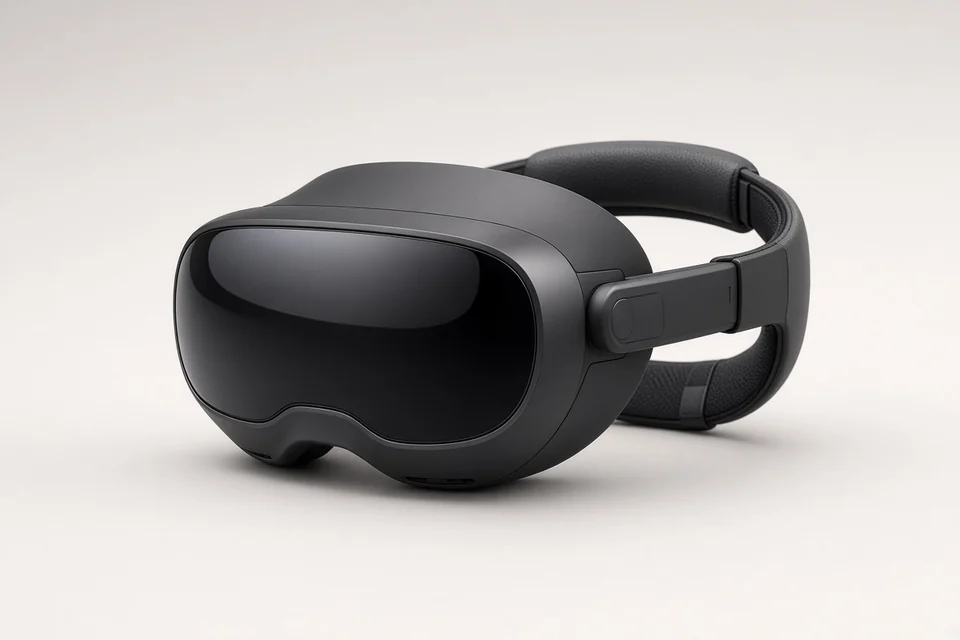 Placeholder — OEM press not licensed
2018 Meta blogs remain the official sources. Product photos are not hosted.
Credit: GadgetShowdown labeled placeholder (not a Meta asset). View official product image
Studio still only. Manufacturer press JPEGs are not hosted here. See the official product page for the real product photo.
In short
Go is 3DoF standalone at $199 / $249 (2018). It is not Quest and not Gear VR. “Wide field of view” in the intro blog is not a degree. Do not invent grams or an IPD slider.
Who it is for
- Owners documenting the first Oculus standalone from Meta’s own blogs.
Who should skip it
- Anyone who needs 6DoF or Touch. That starts at Quest 1.
- People who need a published FOV degree, IPD millimeters, or headset grams.
- Shoppers treating Mi VR Standalone as this US SKU.
Key differentiators
- Snapdragon 821; 5.5-inch 2560×1440 WQHD fast-switch LCD; 538 ppi (F8).
- 3DoF headset + 3DoF controller (trackpad + trigger). Binary-compatible with most Gear VR apps (dev blog).
- 60 Hz default; optional 72 Hz mode (developer docs).
Caveats
- Intro blog “wide field of view” is not a degree. Do not invent 90°/100°.
- Quest’s later blog says Quest adds an IPD slider like Rift — do not copy that slider onto Go.
- Battery-hour sentences on F8 are content-dependent and were truncated in some fetches — re-open before quoting 2 / 2.5 hours as a hard spec.
- No hands-on testing.
VR-category specs
Same rows on every headset hub (Vision Pro, Quest, Galaxy XR, PICO, PS VR2). FOV, weight, and battery cells quote the manufacturer footnote — they are not lab measurements.
| Attribute | Value | Source / note |
|---|---|---|
| Display type | 5.5-inch fast-switch LCD; 538 ppi; WQHD (F8 / availability blogs) | Horizon F8 2018 post; Meta Go availability blog |
| Display resolution | 2560 × 1440 WQHD panel (F8). Default eye buffer 1024 (dev blog); 1280×1280 called out as a higher eye-buffer example — that is a render target, not a second panel | Horizon F8 2018 post; Go developer guide |
| Refresh rate (OEM) | Not published | Horizon Go developer guide; optimizing-Go post |
| Field of view (OEM claim) | Intro blog: “wide field of view” — no degree on the cited pages (accessed 2026-09-19) | Horizon introducing-Oculus-Go postDo not invent 90° or 100°. |
| Optics / lenses | F8: “best lenses yet”; availability: “best optics of any VR system we’ve built” at that price. Quest later: same next-gen optics family plus an IPD slider Quest adds | Horizon F8 2018; Quest introducing post (Go optics family) |
| Chip / processor | Qualcomm Snapdragon 821 (F8; CES Xiaomi/Qualcomm post) | Horizon F8 2018; CES 2018 Go update |
| RAM / unified memory | Not published | Cited Meta pagesDo not invent 3 GB. |
| On-device storage | 32 GB ($199) or 64 GB ($249) at F8 availability | Horizon F8 2018 post |
| Operating system | Oculus Mobile SDK; binary-compatible with most Gear VR apps (developer guide) | Horizon Go developer guide |
| Tracking | 3DoF head tracking only (intro / F8). Not inside-out 6DoF. Not Quest Insight | Horizon introducing-Oculus-Go; F8 2018 |
| Controllers | Orientation-tracked 3DoF controller; clickable trackpad + index trigger (developer guide). Distinct physical design from Gear VR controller | Horizon Go developer guide |
| Other input | No Touch / no hand-tracking row on the cited 2018 blogs | Cited Meta pages |
| PC / console tether | None required. Standalone. Not a Rift PC headset | Meta Go availability blog |
| IPD | Not published | Cited Meta pages; Quest introducing postDo not invent a Go IPD window. |
| Weight | Not published | Horizon introducing-Oculus-GoDo not invent 467 g. |
| Passthrough / see-through | Not listed as color MR on the cited 2018 blogs | Cited Meta pages |
| Eye tracking | Not listed | Cited Meta pages |
| Battery — headset (OEM) | F8 post describes a built-in battery with content-dependent life and a streaming-media hour claim. Re-open the live F8 URL before quoting a specific 2 / 2.5 hour pair — some fetches truncated that sentence | Horizon F8 2018 post (re-open before quoting hours) |
| Battery style | Internal headset battery (F8 “built-in”). Wh not published on the cited pages | Horizon F8 2018 post |
| Charging (OEM) | Not itemized on the cited F8 / intro blogs (accessed 2026-09-19) | Cited Meta pages |
| Audio | Intro blog: built-in speakers; no headphones required. Headphone-jack presence not re-confirmed on those two sentences | Horizon introducing-Oculus-Go |
| Wireless | Standalone (Wi-Fi implied for store/media). Generation not itemized on the cited blogs | Cited Meta pages |
| Glasses / prescription | Not published | Cited Meta pages |
| Platform / account lock | Oculus Store / Mobile SDK. Gear VR app compatibility is a developer claim, not Quest Store 6DoF | Horizon Go developer guide |
| Age / intended use (OEM) | Not published | Write-day access note |
| US list price (dated) | $199 (32 GB) / $249 (64 GB) at F8 2018 availability. Intro blog: $199. Not a 2026 street price | Horizon F8 2018; introducing-Oculus-Go |
| Price band | Legacy 3DoF standalone (2018 $199 / $249) | Horizon F8 2018 |
| Announced / introduced | CES 2018 partnerships; intro blog early 2018 / $199; F8 2018 availability in 23 countries | CES 2018 Go update; F8 2018 |
| Availability | Long discontinued. Documented on Meta developer/consumer blogs. Mi VR Standalone is the China Xiaomi sibling — not this slug | CES 2018 Go update; F8 2018 |
Oculus Go extras
Unique to this line or SKU. Other headsets keep the first table aligned and swap this extras list.
| Attribute | Value | Source / note |
|---|---|---|
| Degrees of freedom | 3DoF head + 3DoF controller. The important non-upgrade versus Quest | Horizon introducing-Oculus-Go |
| Optional 72 Hz | Developer-selectable. Tuned comfortable at 60 Hz; 72 Hz brighter / warmer per the performance post | Horizon optimizing-Oculus-Go post |
| China sibling | Mi VR Standalone (Xiaomi, CES 2018). Same core hardware family; not this H1 | https://www.meta.com/blog/oculus-go-update-announcing-our-partnership-with-xiaomi-and-qualcomm-at-ces/ |
Overview
Go stays a hub because “first standalone Oculus” queries still exist and it is easy to accidentally upgrade to Quest. 6DoF successor: /vr/meta-quest-1/.
3DoF is the row
Head and controller are orientation-only. Do not write Insight, room-scale, or Touch.
Display and refresh
2560 × 1440 WQHD fast-switch LCD, 538 ppi, 5.5-inch. 60 Hz default; 72 Hz optional. Eye-buffer 1024 / 1280 examples are developer render targets.
What we refused to invent
FOV degrees, grams, IPD millimeters, RAM, and a hard 2.5-hour battery without re-opening the live F8 sentence.
Sources
- Meta Horizon — Introducing Oculus Go (3DoF, $199) — accessed 2026-09-19
- Meta Horizon — F8 2018 developer news (821, 2560×1440, $199/$249) — accessed 2026-09-19
- Meta Quest Blog — Oculus Go available now — accessed 2026-09-19
- Meta Horizon — Developing for Oculus Go (60/72 Hz, controller) — accessed 2026-09-19
- Meta CES 2018 — Xiaomi / Mi VR Standalone — accessed 2026-09-19
Frequently asked questions
Is this a Quest?
No. Go is 3DoF. 6DoF standalone starts at /vr/meta-quest-1/.
What is the FOV?
Oculus called it wide. No degree on the cited pages. We will not invent one.
60 Hz or 72 Hz?
Developer docs: 60 Hz is normal; 72 Hz is an optional mode.
Is Mi VR the same product?
CES 2018: China-only Xiaomi sibling on the same core hardware family. Different H1.
Official product page: Oculus Go. Specs: Oculus Go specs.