Device hub · VR / spatial · Desk research
Meta Quest (1st gen)
Quest 1 is the 835 / 4 GB / OLED 72 Hz original.
Product images
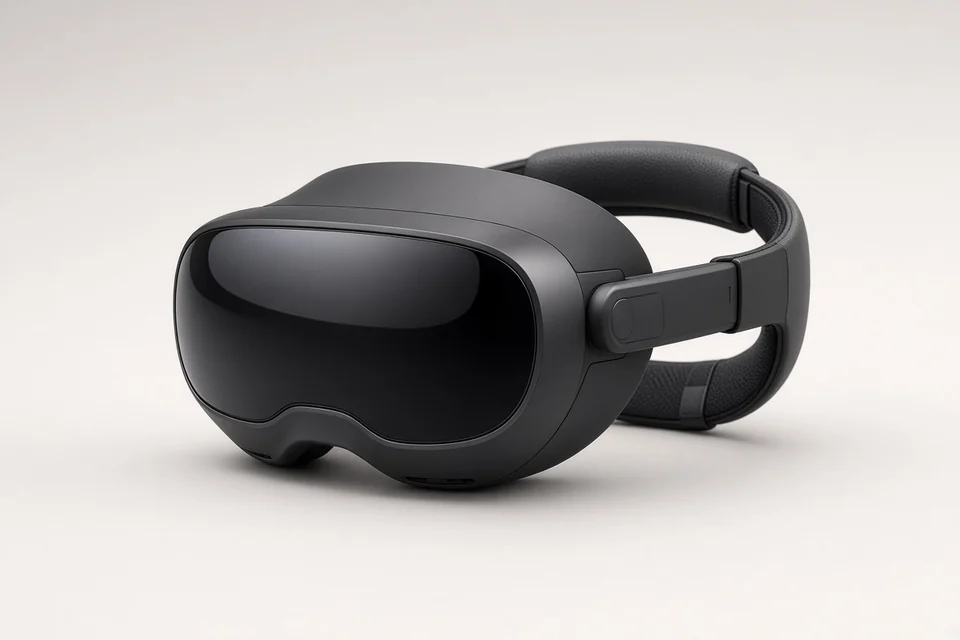 Placeholder — OEM press not licensed
2019 Meta blogs and Horizon tables remain the official sources. Product photos are not hosted.
Credit: GadgetShowdown labeled placeholder (not a Meta asset). View official product image
Studio still only. Manufacturer press JPEGs are not hosted here. See the official product page for the real product photo.
In short
Quest 1 is the 835 / 4 GB / OLED 72 Hz original. It is not Quest 2’s LCD or Quest 3’s pancake. Do not invent FOV degrees, grams, or a 2026 shop price. Axis-order copy (1440×1600 vs 1600×1440) is an OEM conflict, not a second panel.
Who it is for
- Owners still on the original Quest who need Meta’s own 835 / 1440×1600 / 72 Hz rows.
- Writers comparing Quest 1 → 2 → 3/3S/Pro using Horizon render-scale and refresh tables.
Who should skip it
- Anyone trying to buy a new unit from Meta. This generation is long off the store.
- Developers targeting current store submission — Meta’s Quest 1 changes blog: no new Quest 1 apps after 31 January 2024; existing-app updates discontinued 2 May 2025 (deadline extended through 1 May 2025 in the update note).
- People who need published IPD millimeters or headset grams. Not on the cited blogs/tables.
Key differentiators
- Horizon: physical 1440×1600; default render 1216×1344. First inside-out 6DoF Quest + Touch, no external sensors (launch blogs).
- Snapdragon 835; 4 GB RAM (2.75 GB for apps on the developer hardware post); 64/128 GB.
- Refresh: 72 Hz apps; 60 Hz media only. No 80/90/120 check-marks.
Caveats
- Resolution-axis conflict: availability blog + render-scale = 1440×1600. Spring-2019 launch blog and a developer hardware post also say 1600×1440. Same pixel count; flag the swap; do not invent a second panel.
- Do not invent FOV degrees, grams, or IPD mm.
- Support/security windows in the 2023 Quest 1 blog (critical fixes through August 2024; device still usable after) are dated policy — re-open before quoting as current.
- No hands-on testing.
VR-category specs
Same rows on every headset hub (Vision Pro, Quest, Galaxy XR, PICO, PS VR2). FOV, weight, and battery cells quote the manufacturer footnote — they are not lab measurements.
| Attribute | Value | Source / note |
|---|---|---|
| Display type | OLED (availability blog: “an OLED display panel”). Developer hardware post: two OLED screens | Meta Quest Blog availability; Horizon developer hardware post |
| Display resolution | 1440 × 1600 per eye (Horizon render-scale “Meta Quest 1”; availability blog 2880×1600 total / 1440×1600 per eye) | Horizon render-scale; Meta availability blog; launch blog; developer hardware postSpring 2019 launch blog and a developer hardware post also print 1600×1440 per eye. Flag the axis swap; prefer render-scale + availability 1440×1600. |
| Refresh rate (OEM) | 72 Hz for apps. 60 Hz media-apps-only on the Horizon refresh chart. No 80/90/120 marks for “Quest” | Horizon mobile-display-refresh-rate; Meta availability blog (72 Hz) |
| Field of view (OEM claim) | Not published | Cited Meta pagesDo not invent 90° or 100° from reviews. |
| Optics / lenses | Launch blog: same next-gen optics as Oculus Go, plus an adjustable IPD slider like Rift. Lens family not named pancake (that language is later Quest Pro / Quest 3) | Meta Quest launch blog (OC5 / Spring 2019) |
| Chip / processor | Qualcomm Snapdragon 835. Developer hardware post: Adreno 540 at 710 MHz; 8. | Meta availability blog; Horizon developer hardware post |
| RAM / unified memory | 4 GB (developer hardware post: 2.75 GB available for applications) | https://developers.meta.com/horizon/blog/down-the-rabbit-hole-w-oculus-quest-the-hardware-software/ |
| On-device storage | 64 GB or 128 GB at launch (availability blog) | Meta availability blog |
| Operating system | Quest / Horizon OS lineage (Android-based on the developer hardware post). Meta 2023 Quest 1 blog: no new features starting v50; critical bug/security patches through August 2024; existing-app updates ended 2 May 2025 | Horizon developer hardware post; Quest 1 changes blog |
| Tracking | Oculus Insight inside-out 6DoF; no external sensors (launch / availability blogs). Touch controllers included in the launch story | Meta launch and availability blogs |
| Controllers | Oculus Touch built for all-in-one (launch blog). In the box on the 2019 retail kits | Meta launch blog |
| Other input | Hands-in-VR via Touch (availability blog). No eye-tracking row on the cited pages | Meta availability blog |
| PC / console tether | Not published | Meta launch blog; write-day access note |
| IPD | Adjustable IPD slider (launch blog). No millimeter range on the cited pages (accessed 2026-09-19) | Meta launch blogDo not invent 58–72 mm. |
| Weight | Not published | Cited Meta pagesDo not invent 571 g. |
| Passthrough / see-through | Not described as full-color MR on the 2019 blogs. Later Quest 2 developer table (grayscale) is a sibling-generation row — do not copy it here without a Quest 1 sentence | Write-day access note |
| Eye tracking | Not listed | Cited Meta pages |
| Battery — headset (OEM) | Not published | Cited Meta pagesDo not invent a 2–3 hour figure. |
| Battery style | Internal headset battery (typical Quest). Wh not on the cited pages | Product class; Wh not published on cited blogs |
| Charging (OEM) | Not published | Cited Meta pages |
| Audio | Developer hardware post: open-ear audio through the straps (like Go) plus stereo headphone jacks on each side. Launch blog: improved built-in audio / bass without headphones | Horizon developer hardware post; Meta launch blog |
| Wireless | Standalone (no PC required). Wi-Fi/Bluetooth generations not itemized on the cited 2019 blogs | Meta launch blog |
| Glasses / prescription | Not published | Cited Meta pages |
| Platform / account lock | Oculus / Meta account and Quest Store. Launch library was the first-gen Quest catalog — not PS5, not Steam-required | Meta launch / availability blogs |
| Age / intended use (OEM) | Not published | Write-day access note |
| US list price (dated) | 64 GB $399 USD; 128 GB $499 USD on the May 2019 availability blog. Spring 2019 announce post led with $399. Not a 2026 street price | Meta availability blog; Spring 2019 launch blog |
| Price band | Legacy first-gen standalone (2019 $399 / $499) | Meta availability blog |
| Announced / introduced | Announced OC5 / Spring 2019 for $399; available May 2019 with Rift S (availability blog) | Meta launch and availability blogs |
| Availability | Long discontinued at retail. Horizon still documents “Meta Quest 1” for render-scale and refresh. Quest 1 changes blog: users keep existing apps; new apps closed 31 January 2024; app-update support ended 2 May 2025 | Horizon tables; Quest 1 changes blog |
Meta Quest (1st gen) extras
Unique to this line or SKU. Other headsets keep the first table aligned and swap this extras list.
| Attribute | Value | Source / note |
|---|---|---|
| Resolution-axis conflict | Not published | Cited Meta blogs + Horizon render-scale |
| Default render scale | 1.0 = 1216×1344 per eye; physical 1440×1600 | Meta Horizon render-scale |
| App memory (dev post) | 2.75 GB of the 4 GB available to applications | Horizon developer hardware post |
| Quest 1 software window (blog) | No new features from v50; critical fixes/security through August 2024; no new apps after 31 Jan 2024; existing-app updates discontinued 2 May 2025 (update note: deadline extended through 1 May 2025) | https://developers.meta.com/horizon/blog/changes-coming-quest-1-2023-meta/ |
Overview
First-gen Quest stays a hub because Horizon still names Meta Quest 1 on the render-scale and refresh tables, and upgrade queries still start here. Later siblings: /vr/meta-quest-2/, /vr/meta-quest-3/, /vr/meta-quest-3s/, /vr/meta-quest-pro/.
3DoF predecessor: /vr/oculus-go/. Same-week PC SKU: /vr/oculus-rift-s/.
Do not name a product “Quest 4.”
Resolution-axis conflict
| Meta sentence | Per-eye cell |
|---|---|
| May 2019 availability blog | 1440×1600 (2880×1600 total) |
| Horizon render-scale “Meta Quest 1” | 1440×1600 physical; 1216×1344 at 1.0 |
| Spring 2019 launch blog | 1600×1440 |
| Developer hardware post | 1600×1440 OLED @ 72 fps |
Same pixel count. We prefer the availability + render-scale order and footnote the swap.
Refresh
72 Hz apps. 60 Hz media only. Not Quest 2’s 120 Hz consumer list and not Quest 3’s >120–240 exclusive.
What we refused to invent
FOV degrees, grams, IPD millimeters, battery hours, and a 2026 USD ticket.
Sources
- Meta Quest Blog — Oculus Quest + Rift S now available (1440×1600, $399/$499) — accessed 2026-09-19
- Meta Quest Blog — Introducing Oculus Quest (Spring 2019, 1600×1440 wording) — accessed 2026-09-19
- Meta Horizon — Down the rabbit hole (835, 4 GB, 1600×1440 wording, jacks) — accessed 2026-09-19
- Meta Horizon — Render scale (Meta Quest 1 1440×1600) — accessed 2026-09-19
- Meta Horizon — Display refresh rates (Quest: 72 Hz; 60 Hz media only) — accessed 2026-09-19
- Meta Horizon — Upcoming changes to Quest 1 — accessed 2026-09-19
Frequently asked questions
Is this Quest 2?
No. Quest 2 is Fast-Switch LCD 1832×1920, XR2 Gen 1, 6 GB. This hub is the OLED 835 original.
1440×1600 or 1600×1440?
Meta printed both. The May 2019 availability blog and today’s Horizon render-scale table use 1440×1600. The Spring 2019 launch blog and a developer hardware post use 1600×1440. We flag the swap and do not invent a second panel.
Can it do 90 Hz or 120 Hz?
Horizon’s primary chart marks 72 Hz for Quest, and 60 Hz for media apps only. There is no 80/90/120 check-mark for this generation.
FOV? Weight?
Not on the cited pages. We will not invent degrees or grams.
Official product page: Meta Quest (1st gen). Specs: Meta Quest (1st gen) specs.