Device hub · Handheld gaming · Desk research
Steam Deck OLED
OLED is the Steam Deck to buy new if you want Valve’s current hardware: bigger HDR panel, 90Hz, Wi-Fi 6E, 50Wh, and a slightly lighter chassis on the same SteamOS / Steam Input layout.
Product images
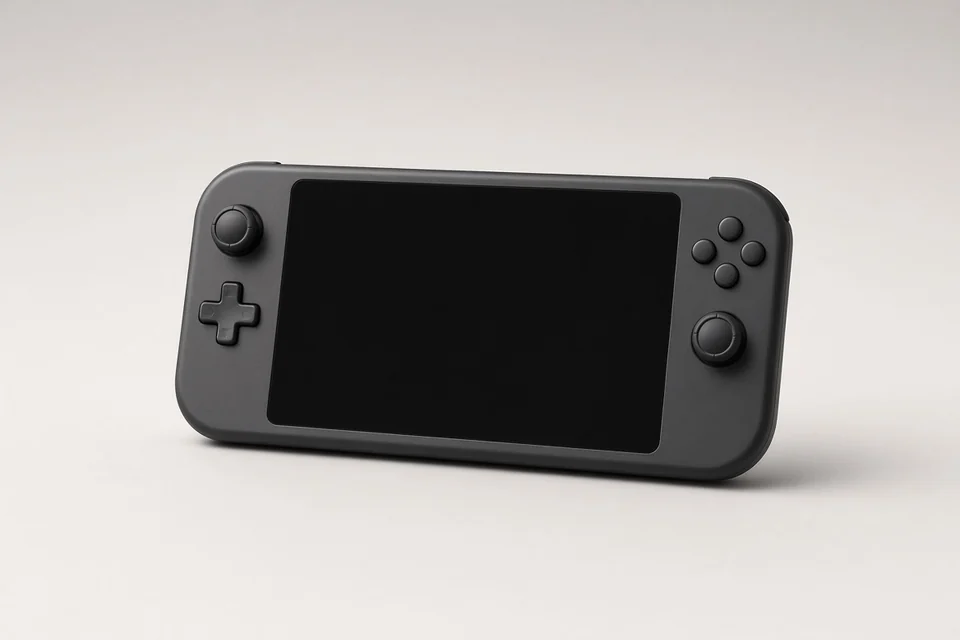 Placeholder — OEM press not licensed
Steam Deck OLED
Credit: GadgetShowdown labeled placeholder (not a Valve asset). View official product image
Valve product images are copyrighted. Typical Steam press and store imagery does not grant a commercial comparison site a redistribution license. Use the official page.
Studio still only. Manufacturer press JPEGs are not hosted here. See the official product page for the real product photo.
Placeholder — OEM press not licensedNumeric rows on this hub were pulled from Valve’s OLED tech spec sheet, not from retailer listings.
Credit: GadgetShowdown labeled placeholder (not a Valve asset). View official product image
Studio still only. Manufacturer press JPEGs are not hosted here. See the official product page for the real product photo.
In short
OLED is the Steam Deck to buy new if you want Valve’s current hardware: bigger HDR panel, 90Hz, Wi-Fi 6E, 50Wh, and a slightly lighter chassis on the same SteamOS / Steam Input layout. It is not a generational GPU jump over LCD Deck — same 8 RDNA 2 CUs and 4–15W APU envelope. Buy it for the display, wireless, and claimed endurance table, not for Z1 Extreme-class raster performance.
Who it is for
- Buyers who want SteamOS, Steam Input, and dual haptic trackpads rather than a Windows handheld.
- People replacing an LCD Steam Deck specifically for the 7.4-inch HDR OLED, 90Hz, Wi-Fi 6E, and Valve’s 3–12 hour / 50Wh table.
- Docked living-room users who already accept 1280×800 upscaled over USB-C DisplayPort (Valve lists up to 8K@60 or 4K@120).
- Anyone who needs capacitive sticks, four rear grip buttons, and a gyro that Steam Input already maps.
Who should skip it
- Shoppers who want a 1080p or 1600p panel. OLED Deck stays 1280×800.
- Windows / Xbox Game Pass / Epic-first buyers who do not want to dual-boot or live in SteamOS desktop mode.
- People who need Z1 Extreme-class TDP (9–30W). Deck’s published APU power is 4–15W.
- LCD Deck owners who only wanted a price cut. Same control layout, same 8 CUs — the paid delta is the panel, wireless, battery, and 6nm efficiency.
Key differentiators
- Only current Steam Deck with HDR OLED, 1,000-nit HDR peak / 600-nit SDR, 110% P3, and up to 90Hz on Valve’s spec sheet.
- SteamOS 3 (Arch-based) plus KDE Plasma desktop — Valve’s console-like Steam UI, not Windows 11.
- Dual 32.5mm haptic trackpads with pressure-sensitive click. Ally and Switch do not ship this.
- 50Wh pack and Valve’s 3–12 hour gameplay claim; OLED page also says 30–50% more battery life than LCD Deck.
Caveats
- Every brightness, battery-hour, and “up to 3× faster downloads” line is a Valve claim. GadgetShowdown has not lab-tested OLED Deck.
- Valve’s current US storefront price can differ from the November 2023 $549 / $649 launch pair. Re-check store.steampowered.com on write day.
- 64GB and 512GB LCD leftovers are a different hub. Do not paste OLED nits or Wi-Fi 6E onto LCD.
- Valve product photography is not hosted here. Use the official pages linked in the gallery and Sources.
Handheld-category specs
Same rows on every handheld page (Steam Deck, ROG Ally, Legion Go, Switch).
| Attribute | Value | Source / note |
|---|---|---|
| SoC / APU | 6nm AMD APU; Zen 2 4 cores / 8 threads, 2.4–3.5GHz (up to 448 GFlops FP32) | Valve Steam Deck OLED tech specs |
| GPU | 8 RDNA 2 CUs, 1.6GHz (1.6 TFlops FP32) | Valve Steam Deck OLED tech specs |
| TDP / APU power (OEM) | 4–15W APU power | Valve Steam Deck OLED tech specs |
| RAM | 16GB LPDDR5 on-board (6400 MT/s, quad 32-bit channels) | Valve Steam Deck OLED tech specs |
| Storage | 512GB or 1TB NVMe SSD | Valve Steam Deck OLED tech specs |
| Expandable storage | High-speed microSD (UHS-I; SD / SDHC / SDXC) | Valve Steam Deck OLED tech specs |
| Display size | 7.4-inch diagonal | Valve Steam Deck OLED tech specs |
| Display type | HDR OLED touchscreen | Valve Steam Deck OLED tech specs |
| Display resolution | 1280 × 800 RGB | Valve Steam Deck OLED tech specs |
| Refresh rate | Up to 90Hz | Valve Steam Deck OLED tech specs |
| Peak brightness (OEM) | 1,000 nits peak (HDR); 600 nits (SDR) | Valve Steam Deck OLED tech specsManufacturer peak-nits claim, not a measured outdoor reading. |
| HDR / color (OEM) | HDR OLED; >1,000,000:1 contrast; 110% P3; <0.1ms response | Valve Steam Deck OLED tech specs |
| Controls | ABXY; D-pad; L/R analog triggers; L/R bumpers; View & Menu; two full-size capacitive analog sticks | Valve Steam Deck OLED tech specs |
| Trackpads | Two 32.5mm square haptic trackpads; pressure-sensitive click | Valve Steam Deck OLED tech specs |
| Gyro / motion | 6-axis IMU | Valve Steam Deck OLED tech specs |
| Haptics | HD haptics (plus haptic trackpads) | Valve Steam Deck OLED tech specs |
| Rear / grip buttons | Four assignable grip buttons (L4/L5/R4/R5) | Valve Steam Deck OLED tech specs |
| Battery capacity | 50Wh | Valve Steam Deck OLED tech specs |
| Battery life (OEM) | 3–12 hours of gameplay (content dependent) | Valve OLED tech specs; steamdeck.com/en/oledOLED product page also claims 30–50% more battery life than LCD Deck. |
| Charging (OEM) | USB-C PD 3.0, 45W supply, 2.5m cable. OLED page: 20% to 80% in as little as 45 minutes | Valve OLED tech specs; OLED product page |
| Operating system | SteamOS 3 (Arch-based); KDE Plasma desktop | Valve Steam Deck OLED tech specs |
| Store / ecosystem | Steam (Deck Verified program). Desktop mode can add other stores; that is not a Valve handheld warranty story. | Valve OLED / Deck Verified pages |
| Weight | Approximately 640 grams | Valve Steam Deck OLED tech specs; OLED product pageOLED page: about 30g / ~5% lighter than LCD Deck because of the screen. |
| Dimensions | 298 × 117 × 49 mm | Valve Steam Deck OLED tech specs |
| Chassis / form | Integrated handheld with fixed grips (not detachable controllers) | Valve Steam Deck OLED tech specs |
| Finishes | Standard dark chassis; 1TB adds premium anti-glare etched glass. Limited translucent/red LE SKUs have existed — confirm the live store SKU. | Valve OLED product page |
| Cooling | Internal fan; OLED page: bigger fan and updated thermals vs LCD | Valve OLED product page |
| Ports | USB-C (charge + DisplayPort / USB 3 Gen 2); 3.5mm headphone/mic; microSD; volume; power | Valve Steam Deck OLED tech specs |
| Wireless (Wi-Fi / Bluetooth) | Tri-band Wi-Fi 6E 2×2 (2.4 / 5 / 6GHz, 802.11a/b/g/n/ac/ax); Bluetooth 5.3 with dedicated antenna | Valve Steam Deck OLED tech specs |
| Speakers / audio | Stereo speakers with embedded DSP; dual microphone array; 3.5mm jack; multichannel via DP-over-USB-C, USB-C, or Bluetooth 5.3 | Valve Steam Deck OLED tech specs |
| Dock / TV output | DisplayPort over USB-C; up to 8K@60Hz or 4K@120Hz, USB 3 Gen 2. Official Steam Deck Dock is a separate accessory. | Valve Steam Deck OLED tech specs |
| US MSRP (launch) | 512GB $549; 1TB $649 (US, November 2023 launch pair) | Valve OLED announcement coverage citing Valve; confirm live storeStreet and Valve store prices go stale. Re-check store.steampowered.com on write day. |
| Price band | Mid handheld PC ($500–$700 US launch) | Derived from $549 start |
| Announced | 9 November 2023 (OLED page / launch week) | Valve OLED product page |
| Availability | Shipping as Valve’s current Steam Deck hardware (512GB and 1TB). LCD 256GB remains a leftover SKU on Valve’s compare module. | Valve OLED / compare pages, accessed 2026-09-19 |
Steam Deck OLED extras
Unique to this line or SKU. Other handhelds keep the first table aligned and swap this extras list.
| Attribute | Value | Source / note |
|---|---|---|
| Anti-glare etched glass | Listed on the 1TB OLED SKU only | Valve OLED product / compare page |
| Touch polling | OLED page: 180Hz touch polling, improved latency and accuracy vs LCD | Valve OLED product page |
| Ambient light sensors | Dual ambient light sensor (ALS) | Valve Steam Deck OLED tech specs |
| Bluetooth controller wake | OLED page adds wake-from-Bluetooth-controller support | Valve OLED product page |
| Bluetooth codecs | OLED page: aptX HD and aptX Low Latency among newer codecs on Bluetooth 5.3 | Valve OLED product page |
| Wi-Fi 6E marketing claim | Valve: faster downloads (up to 3×) and more stable online play vs LCD Wi-Fi 5 | Valve OLED product pageOEM claim. Do not convert into a measured Mbps graph. |
| Fast charge chemistry | OLED page: updated chemistry; 20% to 80% in as little as 45 minutes | Valve OLED product page |
| In the box (compare module) | 45W USB-C supply (2.5m); carrying case (1TB case has removable liner); Steam profile bundle. 1TB also lists exclusive startup movie and virtual keyboard theme. | Valve OLED compare module |
| Desktop mode | KDE Plasma on SteamOS 3 | Valve Steam Deck OLED tech specs |
| Deck Verified | Valve’s game-compatibility badges on Steam. Not a performance guarantee. | Valve Deck Verified pages |
| Storage SKUs | 512GB OLED; 1TB OLED. No 64GB OLED SKU on the current spec sheet. | Valve Steam Deck OLED tech specs |
Overview
Steam Deck OLED is Valve’s current Deck. The physical product is still a 298 × 117 × 49mm integrated handheld — ABXY, D-pad, capacitive sticks, dual trackpads, four rear grips, USB-C, microSD — now with a 7.4-inch HDR OLED, a 6nm APU, 16GB LPDDR5-6400, Wi-Fi 6E, and a 50Wh pack.
This hub exists so later handheld writers can clone one honest device record instead of re-deriving OLED Deck from forum posts. The first spec table is handhelds-v1 — the same keys belong on LCD Deck, ROG Ally, Legion Go, and Switch pages. It is not a sitewide gadget schema. Comparison URLs stay on their own -vs- slugs when they ship. This page’s public path is locked at /handhelds/steam-deck-oled/.
We do not claim we played, docked, or thermally soaked this unit. Where Valve uses ranges (“3–12 hours,” “up to 3× faster downloads”), we repeat the claim and point at steamdeck.com.
Display
Valve specifies a 7.4-inch HDR OLED, 1280 × 800 RGB, up to 90Hz, 1,000 nits peak HDR and 600 nits SDR, contrast greater than 1,000,000:1, 110% P3, under 0.1ms response, high-performance touch, dual ALS. The OLED page adds 180Hz touch polling versus LCD.
For comparison writers: do not write “1080p Steam Deck.” Do not write “brighter than Ally” without an independent measurement — Ally’s spec sheet is 500 nits on a 1080p IPS panel, a different claim shape.
SoC, RAM, and storage
Copy this table, do not invent TFLOPS beyond Valve’s sheet:
| Valve’s words | OLED Deck |
|---|---|
| Process | 6nm AMD APU |
| CPU | Zen 2 4c/8t, 2.4–3.5GHz (up to 448 GFlops FP32) |
| GPU | 8 RDNA 2 CUs, 1.6GHz (1.6 TFlops FP32) |
| APU power | 4–15W |
| RAM | 16GB LPDDR5, 6400 MT/s, quad 32-bit channels |
| Storage | 512GB or 1TB NVMe + UHS-I microSD |
LCD Deck’s sibling rows: 7nm, LPDDR5-5500, 64/256/512GB (64 and 512 while supplies last). Same CU count. The upgrade story is efficiency, memory speed, and the panel — not “twice the GPU.”
Controls
controls, trackpads, gyro, haptics, and rear_buttons are handhelds-v1 rows because every later handheld page should say what it has — including “None.”
Valve’s OLED spec sheet:
- ABXY, D-pad, analog triggers, bumpers, View & Menu
- Two full-size capacitive sticks
- HD haptics
- Two 32.5mm square haptic trackpads, pressure-sensitive click
- 6-axis IMU
- Four assignable grip buttons
A Switch page writes Joy-Con / HD Rumble in the same slots. An Ally page writes Hall-effect triggers and two grip buttons, and puts trackpads: None.
Battery and charging (OEM table only)
| Mode (Valve’s words) | OLED claim |
|---|---|
| Capacity | 50Wh |
| Gameplay | 3–12 hours, content dependent |
| Vs LCD (OLED page) | 30–50% more battery life |
| Fast charge (OLED page) | 20% → 80% in as little as 45 minutes |
| Supply | 45W USB-C PD 3.0, 2.5m cable |
No measured “got 4 hours in Elden Ring” sentence belongs on this page.
Operating system (keep os honest)
Launch and current OEM OS is SteamOS 3 (Arch-based) with a KDE Plasma desktop. That is why the schema is named with SteamOS in the brief: Windows handhelds keep the same key and write Windows 11 Home; Nintendo writes its own OS and eShop.
Deck Verified is a Steam compatibility badge, not a frame-rate warranty.
Weight, chassis, dock
- Weight: approx. 640g. OLED page: ~30g / 5% lighter than LCD because of the screen.
- Size: 298 × 117 × 49mm — same envelope as LCD Deck.
- Form: integrated grips. Not a detachable-controller tablet.
- Dock path: DisplayPort over USB-C, up to 8K@60 or 4K@120, USB 3 Gen 2. Official Dock sold separately. Quote the transport spec; do not invent a 4K gaming table.
How this page compares on a desk (not a vs-page)
Use future -vs- URLs for winners. This hub only keeps a short memory-jog.
| Desk fact (OEM) | Steam Deck OLED | Typical Windows 7-inch Ally-class sheet |
|---|---|---|
| OS | SteamOS 3 | Windows 11 Home |
| Panel | 7.4” 800p HDR OLED, 90Hz | 7” 1080p IPS, 120Hz, ~500 nits |
| APU power | 4–15W | 9–30W |
| Trackpads | Dual 32.5mm | None |
| Battery | 50Wh; 3–12h claim | 40Wh (Ally) / 80Wh (Ally X); hours often unpublished |
A Switch 2 page still wins first-party Nintendo software. That argument belongs on a future handheld vs-page.
Price, SKUs, and what not to invent
US launch pair: $549 (512GB) and $649 (1TB). Limited translucent SKUs existed. Valve’s compare module may show regional prices that are not USD — do not paste a $949 OLED number into a US sentence without checking the storefront currency.
Do not invent Steam-review averages, “we played for a week,” or an independent TFLOPS ranking. If you need a winner against Ally X or Switch 2, wait for a -vs- page.
Sources
- Valve — Steam Deck OLED tech specs — accessed 2026-09-19
- Valve — Introducing Steam Deck OLED — accessed 2026-09-19
- Valve — Steam Deck LCD tech specs (sibling SKU) — accessed 2026-09-19
- Valve — Steam Deck storefront — accessed 2026-09-19
Frequently asked questions
What is actually new versus Steam Deck LCD?
Valve’s own OLED page and spec sheets point to a 6nm APU (same Zen 2 / 8 RDNA 2 class), LPDDR5-6400 vs 5500, 7.4-inch HDR OLED vs 7-inch 60Hz LCD, 90Hz, 1,000-nit HDR peak, 50Wh vs 40Wh, Wi-Fi 6E vs Wi-Fi 5, Bluetooth 5.3 vs 5.0, ~640g vs ~669g, and a 2.5m 45W cable. The control layout is the same family.
Does Steam Deck OLED run Windows?
Valve ships SteamOS 3. Desktop mode is KDE Plasma. Installing Windows is a community path, not an OEM handheld SKU. Do not describe OLED Deck as a Windows handheld the way ROG Ally is.
Is the $549 price a street price?
No. $549 / $649 is Valve’s published US launch pair for 512GB / 1TB OLED (November 2023). Re-check store.steampowered.com on the day you quote a number.
Does OLED Deck have trackpads?
Yes. Two 32.5mm square haptic trackpads with pressure-sensitive click. That is why `trackpads` is a handhelds-v1 row — Ally writes “None”; Legion Go writes a small right-controller pad.
What TDP does Valve publish?
4–15W APU power. Do not invent a 25W or 30W turbo row. Ally’s 9–30W table belongs on the Ally hubs.
How long does the battery last?
Valve’s spec sheet says 3–12 hours of gameplay, content dependent. The OLED page adds a 30–50% improvement versus LCD Deck and a 20–80% charge in as little as 45 minutes. We have not measured a rundown.
Which SKU has etched glass?
Valve’s compare module lists premium anti-glare etched glass on the 1TB OLED SKU, not as a universal OLED row. Confirm the live store configuration before quoting it on a 512GB unit.
What resolution does the dock output?
Valve lists DisplayPort over USB-C up to 8K@60Hz or 4K@120Hz. That is a transport ceiling, not a claim that the 8-CU APU plays modern games at 8K. The official Dock is sold separately.
Official product page: Steam Deck OLED. Tech specs: Steam Deck OLED specs.