Fitness watches comparison · Maker specs
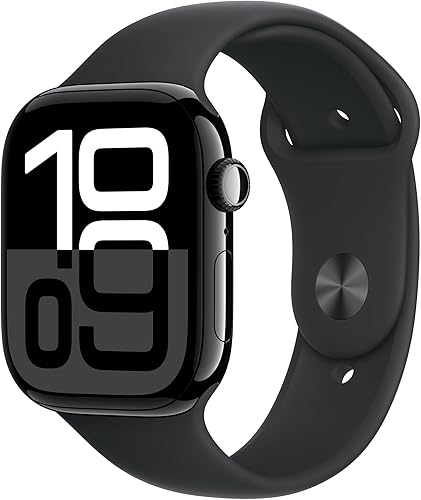
Apple Watch Series 10 vs Apple Watch Ultra 4

Quick Answer
Buy Apple Watch Ultra 4 ($799) for the new heart sensors, up to 50 hours of battery, satellite and a 40m dive rating, in a 12mm-thick titanium case. Keep or buy Apple Watch Series 10 ($399 at launch) if you want a thin everyday watch: it's 9.7mm thick, charges to 80% in about 30 minutes and still gets watchOS 27.
The verdict
Pick Apple Watch Ultra 4 for the new sensors, the battery and the outdoor gear; pick Apple Watch Series 10 if you want a thin everyday watch that charges quickly.
Why: Two years apart and on different chips, they still share Always-On screens that update once a second, ECG, Blood Oxygen, 64GB and watchOS 27. On top of that, Ultra 4 brings S11 with the Health Sensing System, satellite, dual-frequency GPS, 5G RedCap and a 100m rating with dives to 40m, and it lasts up to 50 hours where Series 10 manages 18. Series 10 is 2.3mm thinner and reaches 80% about 15 minutes sooner.
Buy Apple Watch Series 10 if
You already own one, or you can get it well below its $399 launch price and want a thin watch to wear every day.
Buy Apple Watch Ultra 4 if
You want the readiness score and frequent heart readings, a battery that lasts a weekend, or satellite and dive gear for time outdoors.
Apple unveiled Series 10 on 9 September 2024 and put it in stores on 20 September; Ultra 4 followed on 9 September 2026. Series 11 and Series 12 came in between, and Series 12, also from $399, now has the same Health Sensing System as Ultra 4. So this is a two-year-old everyday watch against the newest Ultra, and Series 10 is still supported: it gets watchOS 27 like every Series 9 or later.
Side by side
| Spec | Apple Watch Series 10 | Apple Watch Ultra 4 |
|---|---|---|
| Announced | 9 September 2024 | 9 September 2026 |
| Sizes | 42mm or 46mm | 49mm only |
| Thickness | 9.7mm | 12mm |
| Case | Aluminum or titanium | Grade 5 titanium |
| Display | Wide-angle LTPO3, 2,000 nits | LTPO3, 3,000 nits |
| Chip and storage | S10; 64GB | S11; 64GB |
| Heart sensors | Third-generation optical, plus ECG | Health Sensing System |
| Normal use | Up to 18 hours | Up to 50 hours |
| Low Power Mode | Up to 36 hours | Up to 84 hours |
| Charge to 80% | About 30 minutes | About 45 minutes |
| GPS | L1 | Dual-frequency |
| Cellular | LTE and UMTS | 5G RedCap and LTE |
| Water | 50m; depth gauge for snorkeling | 100m; dives to 40m |
| US launch price | $399 | $799 |
The new heart sensors belong to Ultra 4
Series 10 uses a third-generation optical heart sensor and has neither the Health Sensing System nor a readiness score. Ultra 4 checks your heart rate in the background every five seconds and heart rate variability as often as every five minutes, then turns that into a 0–10 readiness score each day. Apple’s 60× and 24× figures for those readings compare Ultra 4 with Ultra 3, not with Series 10.
Series 10 still covers the core health features. It has ECG and Blood Oxygen (available by region, and not diagnostic), plus sleep apnea notifications for people 18 and older, a feature Apple offers on Series 9 or later and Ultra 2. Series 10 launched without a Sleep score or hypertension notifications; Apple has since added some of those features to older watches through software updates.
Charging fast against lasting long
Apple rates Series 10 for 18 hours of normal use and 36 in Low Power Mode, and gives it no outdoor workout rating. What it does well is charge: 80% in about 30 minutes, 8 hours of normal use from 15 minutes and 8 hours of sleep tracking from 8 minutes. If you top up every morning, that fits a daily routine better than Ultra 4’s 45 minutes to 80%.
Ultra 4 is rated for up to 50 hours, or 84 in Low Power Mode, plus 18 hours in an outdoor workout, 25 in Extended Workout and 45 in Max Extended Workout, which covers outdoor running, walking and hiking with GPS checking your position every second. A 15-minute charge gives it about 18 hours. If you’ll go two days without a charger, Ultra 4 is the one rated for it.
A thinner case and a wide-angle screen
Series 10 was the watch that introduced the wide-angle LTPO3 OLED, which Apple says can look up to 40 percent brighter when you glance at it from the side. It peaks at 2,000 nits and dims to 1, with 374 × 446 pixels (989 square millimeters) on the 42mm and 416 × 496 (1,220 square millimeters) on the 46mm, both at 326 ppi. The front is Ion-X glass on aluminum models and sapphire on titanium.
Ultra 4’s LTPO3 screen is brighter, at 3,000 nits, with 422 × 514 pixels across 1,245 square millimeters. Both are Always-On and refresh once a second with your wrist down; Series 10 brought that to the Series line and Ultra 4 lists the same 1Hz rate, so it’s no reason to upgrade.
The cases are where you’ll feel the difference. Series 10 measures 42 × 36 × 9.7mm or 46 × 39 × 9.7mm. In aluminum with GPS it weighs 30 grams (42mm) or 36.4 grams (46mm), and in titanium 34.4 or 41.7 grams; Apple lists some cellular models as lighter than their GPS versions. Ultra 4 is 49 × 44 × 12mm and about 63 grams, in titanium only. Series 10 fits wrists from 130 to 200mm (42mm) or 140 to 245mm (46mm), and Ultra 4 fits 130 to 210mm.
What Ultra 4 adds outdoors
Ultra 4 has dual-frequency GPS, 5G RedCap cellular (model A3579), an Action Button, a siren, satellite messaging and a 40m dive rating, and Apple rates it for wrist temperatures down to minus 20 degrees Celsius and altitudes up to 9,000 meters. Both watches are IP6X dust resistant, but Series 10 has no MIL-STD rating, and Apple specifies it for 0 to 35 degrees Celsius and up to 3,000 meters of altitude.
Series 10’s GPS is single-frequency L1, with GLONASS, Galileo, QZSS and BeiDou, and its cellular models use LTE and UMTS. Its 50-meter water rating covers swimming and snorkeling but not scuba; for snorkelers it has a depth gauge, a water temperature sensor and Oceanic+ support (a subscription), with no stated depth limit such as 6 meters. Hiking gets a compass, waypoints, Backtrack, offline maps, U.S. topographic maps and curated hikes in 63 national parks, and running metrics include stride length, ground contact time and vertical oscillation. Staying on Series 10 doesn’t cost you maps; it costs you dual-frequency GPS and the long GPS workout ratings.
Everything else
Series 10 runs S10 with a 4-core Neural Engine and 64GB, against S11 and 64GB in Ultra 4. It supports double tap but not wrist flick, which arrived with Series 11. It has Wi-Fi 4, though Apple doesn’t break out 2.4GHz and 5GHz the way it does for later Series models, plus Bluetooth 5.3 and a second-generation ultra-wideband chip. Apple Watch For Your Kids works on cellular models, though a child’s watch doesn’t get every feature. There’s no Action Button to map a flashlight to, and Apple lists no flashlight for it.
Series 10 ships with one band and a USB-C magnetic charger. Apple counts it as carbon neutral with certain bands and says more than 30 percent of its material is recycled or renewable, with cases of 100 percent recycled aluminum or 95 percent recycled titanium. Ultra 4 is 45 percent recycled content, including all of the titanium in its case and recycled cobalt and lithium in the battery.
Price
Series 10 launched at $399 and Ultra 4 at $799. Before you buy a Series 10, look at Series 12: it also starts at $399 and adds the Health Sensing System that Series 10 lacks. Series 10 is a good buy only at a clear discount, and one priced anywhere near Ultra 4 is the wrong deal, so check apple.com before you buy.
Frequently asked questions
How thin is Series 10?
9.7 millimeters in both sizes, against 12 on Ultra 4, a 2.3-millimeter difference. It's much lighter too: a 46mm aluminum GPS Series 10 weighs 36.4 grams, and Ultra 4 weighs 63.0 grams in natural titanium.
How fast does Series 10 charge?
Faster than Ultra 4: about 30 minutes to reach 80%, against about 45. A 15-minute top-up is worth about 8 hours of normal use on Series 10, and 8 minutes covers a night of sleep tracking, about 8 hours. Ultra 4 turns the same 15 minutes into about 18 hours.
Does Series 10 have 5G?
No. Its cellular models use LTE and UMTS. 5G RedCap arrived with Series 11 and is on Ultra 4's model A3579, and moving Series 10 to watchOS 27 doesn't change its radio.
Did Series 10 drop stainless steel?
Yes. Apple replaced the stainless steel case with Grade 5 titanium, alongside aluminum. Aluminum comes in jet black, rose gold and silver, and titanium in slate, gold and natural. Ultra 4 is titanium only, in natural or black.
Sources
- Apple Support — Apple Watch Series 10 tech specs — accessed 2026-09-22
- Apple Newsroom — Apple Watch Series 10, 9 September 2024 — accessed 2026-09-22
- Apple — Apple Watch Ultra 4 tech specs — accessed 2026-09-22