Tablets comparison · Maker specs
iPad Air (M4) vs iPad Pro (M5)

Quick Answer
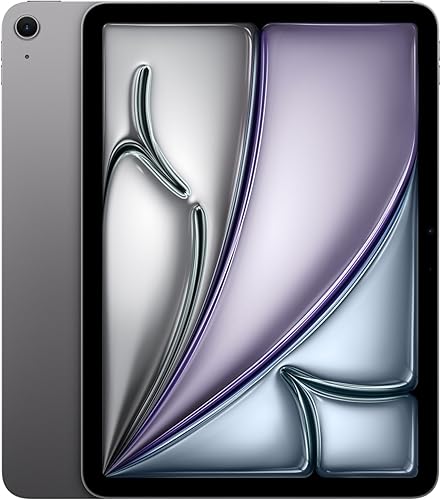
Buy iPad Air (M4) at $599 unless you'll use what iPad Pro (M5) adds for $999: a tandem OLED screen with ProMotion, Face ID, four speakers and Thunderbolt. Both start with 12GB of memory, work with Apple Pencil Pro and come in 11-inch and 13-inch sizes, so the extra $400 buys the screen and the port, not pencil support.
The verdict
Get iPad Air (M4) if notes, drawing, reading and video are the job; get iPad Pro (M5) if you edit HDR, want the 120 Hz ProMotion screen, or need Thunderbolt or 16GB of memory.
Why: Both come in 11-inch and 13-inch sizes, start at 12GB of memory, work with Apple Pencil Pro and hover, use Apple's N1 chip for Wi-Fi 7 and carry the same 10-hour battery claim. The Pro's tandem OLED screen reaches 1000 nits full screen and 1600 for HDR with ProMotion up to 120 Hz, against an IPS panel at 500 or 600 nits, and its Thunderbolt port runs at up to 40Gb/s against the Air's 10Gb/s.
Buy iPad Air (M4) if
You want Apple Pencil Pro and a big screen for notes, drawing, reading and video, you'd rather put the difference toward a pencil and keyboard, or you want blue, purple or starlight.
Buy iPad Pro (M5) if
You edit photos or HDR video, work from a 120 Hz monitor or Thunderbolt accessories, want Face ID and four speakers, or need 16GB of memory on a 1TB or 2TB model.
Apple announced iPad Pro (M5) on 15 October 2025 and put it in stores a week later, on 22 October; iPad Air (M4) followed in stores on 11 March 2026. Both were still Apple’s current models on 19 September 2026, and they share more than their prices suggest: the two screen sizes, iPadOS, Apple Pencil Pro with hover, Wi-Fi 7 and 12GB of memory to start.
At 11 inches the Pro costs $400 more, $999 against $599, and at 13 inches the gap is wider: $1,299 against $799. For that you get the tandem OLED screen, Face ID, four speakers, LiDAR and the Thunderbolt port.
The differences at a glance
| Spec | iPad Air (M4) | iPad Pro (M5) |
|---|---|---|
| Display | Liquid Retina, LED-backlit IPS | Ultra Retina XDR, tandem OLED |
| Brightness | 500 nits (11-inch); 600 nits (13-inch) | 1000 nits full screen; 1600 nits peak (HDR); 1 nit minimum |
| Refresh rate | Not published | ProMotion, 10 Hz to 120 Hz |
| Resolution | 11-inch: 2360 × 1640; 13-inch: 2732 × 2048; 264 ppi | 11-inch: 2420 × 1668; 13-inch: 2752 × 2064; 264 ppi |
| Contrast | Not published | 2,000,000:1 |
| Chip | M4: 8-core CPU (3 performance, 5 efficiency), 9-core GPU, 120GB/s | M5: 9-core CPU (256GB, 512GB) or 10-core CPU (1TB, 2TB); 10-core GPU; 153GB/s |
| Memory | 12GB on every model | 12GB (256GB, 512GB); 16GB (1TB, 2TB) |
| Storage | 128GB, 256GB, 512GB, 1TB | 256GB, 512GB, 1TB, 2TB |
| Speakers and mics | Landscape stereo; two microphones | Four speakers; four microphones |
| Unlock | Touch ID in the top button | Face ID |
| Rear camera | 12MP Wide, f/1.8, sapphire lens cover | 12MP Wide, f/1.8, LiDAR, Adaptive True Tone flash |
| Port | USB 3, up to 10Gb/s | Thunderbolt / USB 4, up to 40Gb/s |
| External display | One, up to 6K at 60 Hz | One, up to 6K at 60 Hz or 5K at 120 Hz |
| Thickness | 6.1 mm | 5.3 mm (11-inch); 5.1 mm (13-inch) |
| Weight, 11-inch | 464 g Wi-Fi; 465 g cellular | 444 g Wi-Fi; 446 g cellular |
| Weight, 13-inch | 616 g | 579 g Wi-Fi |
| Battery | 28.93 Wh (11-inch); 36.59 Wh (13-inch) | 31.29 Wh (11-inch); 38.99 Wh (13-inch) |
| Fast charge | Not published | About 50% in 30 minutes with a 60W-class adapter, sold separately |
| Finishes | Blue, Purple, Starlight, Space Gray | Silver, Space Black |
| US launch, Wi-Fi | $599 (11-inch); $799 (13-inch) | $999 (11-inch); $1,299 (13-inch) |
| Cellular | +$150; C1X modem, eSIM | +$200; C1X modem, eSIM |
| Same on both | Apple Pencil Pro and USB-C with hover; N1 with Wi-Fi 7, Bluetooth 6, Thread; up to 10 hours of battery | Same |
The screen is the big difference
The Air’s screen is an LED-backlit IPS panel rated at 500 nits on the 11-inch and 600 nits on the 13-inch. The Pro’s is tandem OLED, which Apple calls Ultra Retina XDR: 1000 nits across the full screen, 1600 nits peak for HDR content and down to 1 nit, with a 2,000,000:1 contrast ratio and ProMotion refresh from 10 Hz to 120 Hz. Apple calls it its most advanced display. On the 1TB and 2TB Pro you can add nano-texture glass, which the Air doesn’t offer.
Both are fully laminated, with P3 color, True Tone and Pencil hover, and both have 264 pixels per inch, so sharpness is a wash. The sizes differ slightly. The 11-inch Air is a 10.86-inch rectangle at 2360 × 1640, and the 11-inch Pro an 11.1-inch rectangle at 2420 × 1668. The 13-inch Air measures 12.9 inches as a rectangle at 2732 × 2048, while the 13-inch Pro is a full 13 inches at 2752 × 2064.
If you edit HDR photos or video, or you want the 120 Hz refresh rate, buy the Pro. If notes, reading, streaming and sketching on a 500-nit or 600-nit screen are the job, the Air does them for $400 less.
Same memory to start, different chips
Every iPad Air (M4) has 12GB of memory, the 128GB model included. iPad Pro (M5) has 12GB on its 256GB and 512GB models and 16GB on 1TB and 2TB. So the Air never reaches 16GB, and the Pro never comes with 128GB of storage.
The chips differ more than the memory does. The Air’s M4 has an 8-core CPU (three performance and five efficiency cores), a 9-core GPU and a 16-core Neural Engine, with 120GB/s of memory bandwidth. The Pro’s M5 has a 9-core CPU on the 256GB and 512GB models, with three super cores and six efficiency cores, and a 10-core CPU on 1TB and 2TB. Every M5 has a 10-core GPU, Neural Accelerators, 153GB/s of bandwidth and a media engine with ProRes and AV1 decode. Apple also says the Pro’s storage is faster than the previous Pro’s, without giving a speed.
Face ID, four speakers and LiDAR
The Air unlocks with Touch ID in the top button; the Pro has Face ID, which uses its TrueDepth front camera. Otherwise the front cameras match: a landscape 12MP Center Stage camera at f/2.0 that records 1080p. For sound, the Air has landscape stereo speakers and two microphones, and the Pro has four speakers and a four-microphone array.
Each has a 12MP Wide rear camera at f/1.8 that shoots 4K at up to 60 frames per second, and the Air’s sits under a sapphire lens cover. The Pro adds LiDAR, an Adaptive True Tone flash and ProRes recording at up to 4K and 30 frames per second, or 1080p at 30 on the 256GB model.
Thunderbolt and external displays
The Air’s USB-C port runs at USB 3 speeds, up to 10Gb/s, and drives one external display at up to 6K and 60 Hz. The Pro’s is Thunderbolt and USB 4, up to 40Gb/s, and drives one display at up to 6K and 60 Hz or 5K and 120 Hz. If you work from a 120 Hz monitor, only the Pro runs it at that rate. Both have a magnetic Pencil connector and a Smart Connector.
The Pro is also thinner and lighter. The 11-inch Pro is 5.3 mm thick and weighs 444 grams with Wi-Fi (446 with cellular), and the 13-inch Pro is 5.1 mm and 579 grams with Wi-Fi. Both Airs are 6.1 mm, at 464 grams (465 with cellular) for the 11-inch and 616 grams for the 13-inch. Those weights are for the tablet alone.
Same radios, same battery claim
Wi-Fi 7 isn’t a reason to buy the Pro: both use Apple’s N1 chip, with Wi-Fi 7 where it’s supported, Bluetooth 6 and Thread. Cellular is optional on both, eSIM only, with the C1X modem; it added $150 to the Air at launch and $200 to the Pro. Apple says the Pro’s C1X is up to 50 percent faster than the modem in the previous Pro, a claim about the old Pro, not about the Air.
The Pro has bigger batteries, 31.29 and 38.99 watt-hours against 28.93 and 36.59 in the Air, yet Apple rates both the same: up to 10 hours of Wi-Fi web or video, or up to 9 hours of web use on cellular. Each ships with a 20-watt adapter and a 1-meter cable. Only the Pro has a fast-charge rating, about 50 percent in around 30 minutes, and it needs Apple’s 40-watt Dynamic Power Adapter with 60-watt max or another USB-C adapter of at least 60 watts, sold separately.
Both run iPadOS and launched with iPadOS 26 features, some limited by region. The Air comes in Blue, Purple, Starlight and Space Gray, the Pro in Silver and Space Black, and neither has an IP rating.
What they cost
Wi-Fi Airs started at $599 for the 11-inch and $799 for the 13-inch, or $549 and $749 with education pricing, and cellular added $150. The Pro launched at $999 and $1,299, with cellular $200 more, and nano-texture glass is an extra-cost option on its 1TB and 2TB models.
Neither includes a pencil or keyboard. The Pro’s Magic Keyboard was $299 for the 11-inch and $349 for the 13-inch at its October 2025 launch, in black or white, with a function row and an aluminum palm rest. The Air’s Magic Keyboard also has a function row, plus USB-C on the hinge, in black or white; Apple announced it without a price. A keyboard doesn’t turn either one into a Mac. Pencil, keyboard, cellular and nano-texture all add to the total, so price your exact configuration with Apple before you buy.
When a different iPad fits better
Skip both if you want something small: iPad mini (A17 Pro) has an 8.3-inch screen and weighs 293 grams, under 300. Skip both if your budget is $349, which buys iPad (A16), though it doesn’t work with Apple Pencil Pro. And if a 2024 Pro is on your list, iPad Pro (M4) vs iPad Pro (M5) covers the latest Pro update.
Frequently asked questions
Is iPad Air (M4) just a cheaper iPad Pro (M5)?
No. They share a pencil, a radio and a starting memory size, but the Pro has a different kind of screen (tandem OLED with ProMotion), Face ID instead of Touch ID, four speakers, LiDAR and a Thunderbolt port. The Air is the IPS, Touch ID and USB 3 take on an 11-inch or 13-inch iPad.
Do both start at 12GB?
Yes. Every iPad Air (M4) has 12GB, from the 128GB model up. iPad Pro (M5) has 12GB on its 256GB and 512GB models and 16GB on 1TB and 2TB, and there's no 128GB Pro.
Which one is brighter?
iPad Pro (M5). Apple rates it at 1000 nits full screen and 1600 nits peak for HDR, against 500 nits for the 11-inch Air and 600 nits for the 13-inch. Those are two kinds of panel, OLED and IPS, not one panel tuned two ways.
Is the Pencil included on either?
No. Both work with Apple Pencil Pro and Apple Pencil (USB-C), with hover, and both ship without one, so add the pencil to the price of either.
Sources
- Apple — iPad Air product page — accessed 2026-09-22
- Apple — iPad Air technical specifications — accessed 2026-09-22
- Apple — iPad Pro product page — accessed 2026-09-22
- Apple — iPad Pro technical specifications — accessed 2026-09-22