Phones comparison · Maker specs
Google Pixel 11 Pro vs iPhone 17 Pro

Quick Answer
Get Google Pixel 11 Pro unless you're staying with iPhone: both launched at $1,099, but the Pixel is a year newer, with a 5x zoom and seven years of updates. Get iPhone 17 Pro if you rely on iMessage, FaceTime or MagSafe, or shoot ProRes video. Apple has since replaced it with iPhone 18 Pro, so look for a discount.
The verdict
Choose Google Pixel 11 Pro for Android, a 5x telephoto and 8K video; choose iPhone 17 Pro if you're staying with iPhone and want Apple's ProRes video tools, LiDAR and MagSafe.
Why: Same size, same launch price, different years: Pixel 11 Pro came out in August 2026 on Android 17 with a seven-year update promise, and iPhone 17 Pro is Apple's 2025 model. The Pixel has the longer telephoto (5x against 4x), a 42MP selfie camera and a fingerprint reader. The iPhone records 4K Dolby Vision at up to 120fps, is rated IP68 to 6 meters, and charges faster by cable.
Buy Google Pixel 11 Pro if
You're on Android or ready to leave iPhone, and you want the newer phone, with a 5x telephoto, 8K video and Google's seven-year update promise.
Buy iPhone 17 Pro if
You're staying with iPhone for iMessage, FaceTime and MagSafe accessories, or you shoot ProRes or Log video, and you can find it below its $1,099 launch price.
Apple announced iPhone 17 Pro on 9 September 2025. Google announced Pixel 11 Pro almost a year later, on 12 August 2026, and it reached US stores on 20 August 2026; by 19 September 2026, Apple no longer listed the 17 Pro among its current iPhones. So this is a new Pixel against last year’s iPhone, at the same launch price.
| Spec | Google Pixel 11 Pro | iPhone 17 Pro |
|---|---|---|
| Announced | 12 August 2026 | 9 September 2025 |
| US launch price | $1,099 | $1,099 |
| Software | Android 17; 7 years of updates | iOS; no update period given |
| Screen | 6.3-inch Super Actua, 1280 × 2856, 495 ppi, 1–120Hz | 6.3-inch Super Retina XDR, 2622 × 1206, 460 ppi, ProMotion |
| Brightness | Up to 2400 nits HDR, 3600 nits peak | 1000 nits typical, 1600 nits HDR, 3000 nits outdoors |
| Chip | Tensor G6, Titan M3 | A19 Pro, 6-core GPU, 16-core Neural Engine |
| RAM | 12GB with 256GB; 16GB with 512GB or 1TB | Not published |
| Storage | 256GB, 512GB or 1TB | 256GB, 512GB or 1TB |
| Rear cameras | 50MP wide, 48MP ultrawide, 48MP 5x telephoto | 48MP main, 48MP ultrawide, 48MP 4x telephoto |
| Front camera | 42MP, f/2.2 | 18MP Center Stage, f/1.9 |
| Battery | 4850 mAh typical (4707 minimum); 30+ hours | Up to 33 hours video, 30 hours streamed; capacity not published |
| Wired charging | About 55% in 30 minutes (30W) | 50% in 20 minutes (40W or higher) |
| Wireless charging | Pixelsnap, Qi2.2, up to 25W | MagSafe or Qi2, up to 25W |
| Water and dust | IP68 (no depth given) | IP68, 6 meters for up to 30 minutes |
| Size | 152.7 × 71.9 × 8.4 mm | 150.0 × 71.9 × 8.75 mm |
| Weight | 204 g | 206 g |
| Unlock | Fingerprint and face | Face ID |
Android or iOS decides most of it
Pixel 11 Pro launched on Android 17 with Google’s promise of 7 years of OS, security and Pixel Drop updates. Apple doesn’t put a number of years on iPhone 17 Pro’s updates. iPhone 17 Pro arrived in 2025, and Apple’s specs for it still refer to iOS 26.
Unlocking differs: the Pixel takes your fingerprint or face, or a pattern, PIN or password, while iPhone 17 Pro uses Face ID and has no fingerprint reader. In the US both are eSIM-only. The Pixel runs two eSIMs at once and stores eight or more, and the US iPhone won’t accept a physical SIM card.
Both have Wi-Fi 7, Bluetooth 6, ultra-wideband, Thread and NFC; Apple lists its own N1 chip and second-generation ultra-wideband for the iPhone. The Pixel uses dual-band GPS, GLONASS and Galileo, and the iPhone’s dual-frequency GPS also lists QZSS, BeiDou and NavIC. Google lists G7SWN and GBC0H as the Pixel’s US 5G millimeter-wave models; Apple lists A3256 and A3257 for the iPhone.
For emergencies, the Pixel has Satellite SOS (country and setup limits apply), Emergency SOS, Car Crash Detection and Safety Check. The iPhone has Emergency SOS, Roadside Assistance, Messages and Find My over satellite, plus Crash Detection. Apple’s satellite terms have included two years of free service on iPhone 14 and later, so check what the current plan includes.
Cameras: Google’s 5x zoom and 8K, Apple’s video tools
Main. The Pixel’s main camera has 50 megapixels on a 1/1.3-inch Octa PD sensor (f/1.68, 82 degrees). The iPhone’s 48-megapixel Fusion Main sits at 24mm (f/1.78) and doubles as a 12MP optical-quality 2x at 48mm.
Ultrawide. Both are 48 megapixels. The Pixel’s uses a 1/2.51-inch Quad PD sensor (f/1.7, 123 degrees) with macro autofocus; the iPhone’s Fusion Ultra Wide is 13mm (f/2.2, 120 degrees).
Telephoto. The Pixel’s 48-megapixel telephoto zooms 5x optically, on a 1/1.95-inch Quad PD sensor (f/2.8, 23 degrees) with optical stabilization. The iPhone’s 48-megapixel Fusion Telephoto uses a tetraprism at 100mm (f/2.8), which Apple calls 4x, and gives a 12MP optical-quality 8x at 200mm. Google lists optical-quality steps at 0.5x, 1x, 2x, 5x and 10x, and Pro Zoom, its name for zooming past the optical range, reaches 120x. Apple quotes a 16x optical-quality range and digital zoom up to 40x.
Front. The Pixel has a 42-megapixel camera with Dual PD autofocus (f/2.2, 103 degrees); the iPhone has an 18MP Center Stage camera with autofocus (f/1.9).
Video is where they split most. The Pixel shoots 8K at 24 or 30fps with Video Boost, 4K at up to 60fps and Super Zoom Video up to 20x, plus 4K at 30 or 60fps from the front. The iPhone records 4K Dolby Vision at up to 120fps on the main camera and ProRes up to 4K at 120fps to an external drive. It adds ProRes RAW, Apple Log 2, ACES, genlock with compatible gear, Dual Capture and Cinematic mode at 4K and 30fps, and Action mode at 2.8K and 60fps. The iPhone also has a LiDAR scanner and the Camera Control and Action buttons.
The Pixel’s extra is HiLight, colored LEDs around the flash that show Gemini status and caller colors while the phone lies face down.
Screens and build
The Pixel’s Super Actua screen is 161mm on the diagonal in a 20:9 shape, at 1280 × 2856 and 495 pixels per inch, refreshing from 1Hz to 120Hz, with contrast over 2,000,000:1 under Gorilla Glass Victus 2. Google rates it for 2,400 nits in HDR and 3,600 nits peak, and says the anti-scratch coating has more than double the previous generation’s resistance. The iPhone’s Super Retina XDR screen is 2622 × 1206 at 460 pixels per inch, with ProMotion, the Dynamic Island, Ceramic Shield 2 and an anti-reflective coating. Apple rates it for 1,000 nits typical, 1,600 in HDR and 3,000 outdoors, and down to 1 nit. Google’s peak and Apple’s outdoor figure are each company’s own rating, so the gap between them isn’t a like-for-like measure.
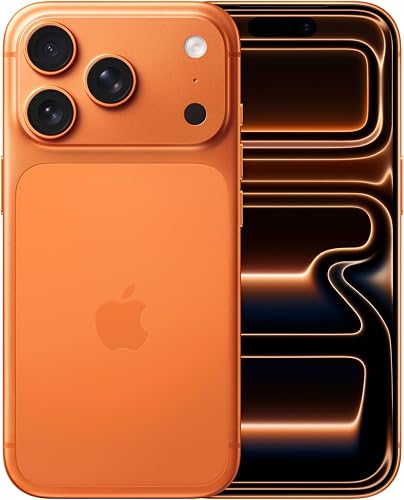
Pixel 11 Pro measures 152.7 × 71.9 × 8.4mm (6.0 × 2.8 × 0.3 inches) and weighs 204 grams (7.2 ounces). iPhone 17 Pro is 150.0 × 71.9 × 8.75mm and 206 grams. The Pixel has a spacecraft-grade aluminum frame, matte on Obsidian, and a silky matte Victus 2 back, in Canyon, Olive, Fog and Obsidian. The iPhone is a brushed 7000-series aluminum unibody with a laser-welded vapor chamber inside, in Silver, Cosmic Orange and Deep Blue. Both are IP68, and Apple rates iPhone 17 Pro to 6 meters for up to 30 minutes.
Google says Pixel 11 Pro is at least 31% recycled material by weight, with 100% recycled aluminum in the housing and 100% recycled cobalt and lithium in the battery. Apple says iPhone 17 Pro has 30% recycled content, including 50% recycled aluminum in the enclosure, 100% recycled cobalt and 95% recycled lithium.
Battery and charging
Google and Apple rate batteries in different terms. Pixel 11 Pro has a 4,850mAh battery (4,707mAh minimum) that Google rates for 30+ hours. Apple doesn’t give iPhone 17 Pro’s capacity; it rates the phone for up to 33 hours of video, or 30 hours streamed. Neither figure translates into the other, so treat them as each company’s own claim.
The Pixel gets to about 55% in 30 minutes with a 30W USB-C PPS charger and charges wirelessly at up to 25W on Pixelsnap (Qi2.2). The iPhone reaches 50% in 20 minutes on a 40W adapter, takes up to 25W from MagSafe or Qi2 chargers, and gets to 50% in 30 minutes on a MagSafe Charger with a 30W or higher adapter. Each box has the phone and a USB-C cable 1 meter long, and neither includes a power adapter.
Price, and which one is current
Both launched at $1,099 in the US, with 256GB, 512GB or 1TB of storage. Apple called the 256GB starting point doubled entry storage, and neither phone comes in 128GB; there’s no 2TB iPhone 17 Pro either. The Pixel’s 512GB and 1TB models use Zoned UFS storage.
The iPhone’s $1,099 is a 2025 launch price. Now that iPhone 18 Pro is Apple’s current compact Pro, a discounted or used iPhone 17 Pro can cost less than a new Pixel, and Google Store trade-in offers aren’t the Pixel’s list price either. Compare what you’d actually pay for each before you buy.
Frequently asked questions
Should I buy Google Pixel 11 Pro or iPhone 17 Pro?
Pixel 11 Pro if you're on Android or open to switching; iPhone 17 Pro if you rely on iMessage, FaceTime or MagSafe accessories. Moving your apps, chats and accessories to a new platform is a bigger job than any spec difference here. If you could go either way, the Pixel is the newer phone for the same $1,099 launch price.
How much RAM does iPhone 17 Pro have?
Apple doesn't say. Pixel 11 Pro has 12GB with 256GB of storage and 16GB with 512GB or 1TB.
Are these the big-screen models?
No. Both are the 6.3-inch models, and they weigh almost the same: 204 grams for the Pixel and 206 for the iPhone. Google's bigger phone is Pixel 11 Pro XL, with a 6.8-inch screen, a 5,115mAh battery and 45W wired charging.
Which one charges faster on a wireless pad?
Neither: both top out at 25W, Pixel 11 Pro on Pixelsnap (Qi2.2) and iPhone 17 Pro on MagSafe or Qi2. With a cable, the iPhone is quicker on paper: 50% in 20 minutes on a 40W adapter, against about 55% in 30 minutes on a 30W charger for the Pixel.
Sources
- Google Help — Pixel phone hardware specs — accessed 2026-09-19
- Google blog — Pixel 11 series — accessed 2026-09-19
- Apple Support — iPhone 17 Pro tech specs — accessed 2026-09-19
- Apple Newsroom — iPhone 17 Pro, 9 September 2025 — accessed 2026-09-19