Fitness rings comparison · Maker specs
RingConn Gen 2 vs RingConn Gen 3
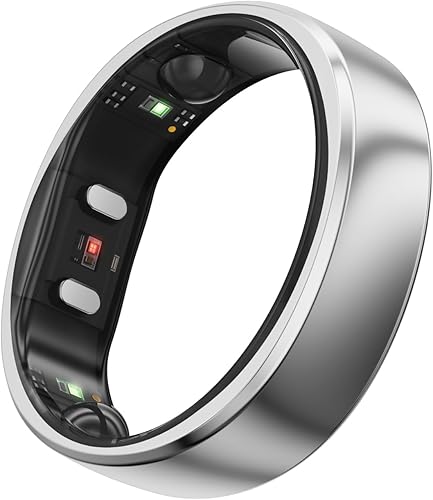

Quick Answer
Buy RingConn Gen 3, from $349, for health alerts you can feel, vascular trends, size 15 and 10 days of offline storage. Get RingConn Gen 2, from $299, only if you find one in stock: it's thinner and lighter, but it had sold out by 19 September 2026. Both skip the subscription.
The verdict
Buy RingConn Gen 3; RingConn Gen 2 is worth it only if you find one in stock and want the slimmest, lightest ring of the two.
Why: Both are titanium, both watch for sleep apnea, both are rated IP68 to 100 meters, and neither charges a subscription. Gen 3 adds a motor for health alerts, vascular trends, size 15 and 10 days of offline storage against 5 to 7. Gen 2 is 2.0 millimeters thick and 2 to 3 grams, against 2.3 millimeters and 2.5 to 3.5 grams.
Buy RingConn Gen 2 if
You can find one in stock, you already know your Gen 2 or Gen 2 Air size, and you want the slimmest band and have no use for a vibration motor.
Buy RingConn Gen 3 if
You want health alerts you can feel, vascular trends or size 15, or you simply want the RingConn that's actually on sale.
Gen 2’s battery rating depends on your ring size. Gen 3’s depends on whether you leave its new vibration motor switched on.
Gen 2 against Gen 3
| Spec | RingConn Gen 2 | RingConn Gen 3 |
|---|---|---|
| Price, 19 September 2026 | From $299, out of stock | From $349, on sale |
| Battery | 10 days (sizes 6–7), 11 (8–11), 12 (12–14) | 10–12 days with vibration on, 11–14 off |
| Vibration alerts | No | Health alerts and reminders |
| Vascular trends | No | Yes |
| Sleep apnea | Monitoring, with a 90.7 percent accuracy claim | Apnea pattern and risk indicators |
| Data kept on the ring | 5–7 days (7 on RingConn’s comparison chart) | 10 days |
| Charging case | Size-specific; up to 150 days; not sold separately | Universal; about 120 minutes to fill |
| Sizes | 6–14 | 6–15, Gen 3 kit |
| Thickness | 2.0 mm | 2.3 mm |
| Width | 6.8 mm | Not published |
| Weight | 2–3 g | 2.5–3.5 g |
| Water | IP68, 100 m (328 ft) | IP68 and ATM10, 100 m (328 ft) |
| Operating temperature | Not published | 0–40 °C (32–104 °F) |
| Phone | iOS 17+, Android 10+, Bluetooth 4.0+ | iOS 17+, Android 10+ |
| Bluetooth | 5.0 | Version not published |
| Finishes | Several colorways | Polished, Brushed, Matte |
| Subscription | None | None |
Battery: your ring size or the motor
The smallest Gen 2s, sizes 6 and 7, are rated for 10 days; sizes 8 to 11 get 11, and sizes 12 to 14 get the 12 days behind RingConn’s “up to 12 days”. If you wear a 6, plan on 10.
RingConn splits Gen 3’s rating by the motor instead of by size. With vibration alerts on, it’s 10 to 12 days; with them off, 11 to 14, so the “up to 14 days” headline assumes a silent ring. Either way you’re charging about every week and a half, and Gen 3’s top figure costs you the alerts.
A magnetic charger fills Gen 2 in about 90 minutes. Gen 3 charges inside its case; refilling the case takes about 120 minutes, and RingConn gives no time for the ring by itself. Offline, Gen 3 stores 10 days of readings to Gen 2’s 5 to 7 (7 on RingConn’s comparison chart).
The motor and vascular trends are new
Gen 3’s motor sits alongside optical heart-rate and temperature sensors and a 3-axis accelerometer, and it taps you only for health alerts and reminders. Gen 2 tracks 24-hour heart rate, blood oxygen, temperature and heart-rate variability, with no motor.
Vascular trends are the other addition. Gen 3 builds them from nighttime patterns, habits and things you enter yourself, and RingConn is clear that they aren’t single blood-pressure readings. Neither ring gives you a cuff number.
Gen 3’s activity list also includes VO2 Max and respiratory rate, which its FAQ counts as a 24-hour reading and RingConn’s comparison chart files under nighttime monitoring. Gen 2’s own list covers steps, calories, workouts and 24-hour vitals.
Sleep apnea on both, in different words
Apnea isn’t what you’d upgrade for. Gen 2 already logs REM, light and deep sleep plus naps, and it watches for sleep apnea, with a 90.7 percent accuracy figure that comes from RingConn rather than a clinic; running that monitoring may drain the battery faster. Gen 3 covers sleep duration and stages and shows an apnea pattern with risk indicators, without the 90.7 percent figure. Gen 2 Air, the cheaper sibling, is the one with no apnea feature.
Only Gen 3 carries RingConn’s not-a-medical-device disclaimer, but the caution fits Gen 2’s apnea monitoring just as well: treat either ring’s readings as a pattern worth knowing about, not a sleep study.
Gen 2 is the slimmer ring
At 2.0 millimeters thick, 6.8 wide and 2 to 3 grams (RingConn’s marketing quotes 2), Gen 2 is the slimmer and lighter ring, in titanium alloy coated with PVD and finished in medical-grade epoxy. Gen 3 swaps the alloy for metallic titanium, again with medical-grade epoxy and PVD, and is the thicker, heavier ring on paper at 2.3 millimeters and 2.5 to 3.5 grams.
Gen 3 offers Polished, Brushed and Matte finishes; Gen 2’s page listed colorways, all sold out.
New kit, new case
Sizes 6 to 14 appear for both rings, but the kits differ. Gen 2 shares its kit with Gen 2 Air. Gen 3 brings its own kit and a size 15, and RingConn warns that Gen 3 sizing matches neither its older rings nor jewelry sizes. Wearing a 9 in Gen 2 doesn’t make you a 9 in Gen 3.
The case changed as well. Gen 2’s comes in the box with a USB-C cable and manuals, fits one ring size, and RingConn claims it keeps the ring going for up to 150 days; it isn’t sold separately, and a replacement is a charging dock. Gen 3’s case is universal, so it charges every RingConn size, and your old Gen 2 case will still charge a Gen 3 ring of the same size.
Price, stock and phones
On 19 September 2026 Gen 2 was sold out, with a starting price of $299; Gen 3 started at $349 and was available. Check both rings’ pages for stock and for the right sizing kit before you buy.
Phone support is the same, iOS 17 and Android 10 onward, though Gen 2 spells out a Bluetooth 4.0 phone and its own Bluetooth 5.0 radio. Gen 3 adds an ATM10 rating to the IP68 and 100 meters (328 feet) both rings share.
Frequently asked questions
Will RingConn Gen 3's motor tap me for messages?
No. The motor is reserved for health alerts and reminders, so texts and alarms stay on your phone. Gen 2 doesn't vibrate at all.
Was RingConn Gen 2 in stock at RingConn?
No. On 19 September 2026 its page showed a from-$299 price under an out-of-stock banner. Gen 3 was on sale from $349, with US delivery in 3 to 5 business days after shipment.
Do RingConn Gen 2 and RingConn Gen 3 require a data subscription?
No. Neither carries a subscription fee on RingConn's comparison chart. The apps differ in one way: Gen 3 keeps your history on your account when you pair a ring again, while Gen 2 allows one ring per account at a time.
Does RingConn give a width for Gen 3?
No. RingConn gives Gen 3's thickness, 2.3 millimeters, and its weight, 2.5 to 3.5 grams, but no width. Gen 2 is 6.8 millimeters wide, 2.0 thick and 2 to 3 grams.
Sources
- RingConn — Gen 2 product page — accessed 2026-09-22
- RingConn — Gen 3 product page — accessed 2026-09-22