Phones comparison · Maker specs
iPhone 13 vs iPhone 12
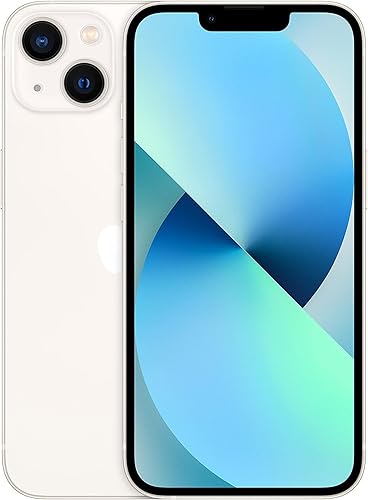
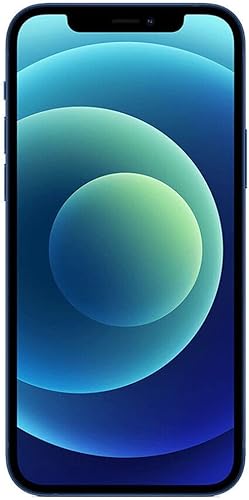
Quick Answer
Buy iPhone 13 unless iPhone 12 is clearly cheaper for the same storage: it starts at 128GB, not 64GB, with a brighter screen and longer battery life. Both launched at $799 and Apple sells neither new, so this is a used-phone choice. Keep an iPhone 12 that has enough storage; 5G and MagSafe are already on it.
The verdict
Pick iPhone 13 when the prices are close; keep iPhone 12, or buy one cheap, if it has the storage you need and 5G and MagSafe cover the rest.
Why: Same 6.1-inch 2532 × 1170 screen, same pair of 12MP cameras, same Lightning port and the same $799 launch price. iPhone 13 starts at 128GB rather than 64GB, runs the A15 Bionic, reaches 800 nits typical against 625, and plays video for up to 19 hours against 17. 5G and MagSafe were already on iPhone 12.
Buy iPhone 13 if
You're buying used and want at least 128GB, Cinematic mode or the longer battery life, and a same-storage iPhone 12 isn't much cheaper.
Buy iPhone 12 if
You already own one with enough storage, or you find a 128GB or 256GB model clearly below a comparable iPhone 13 and you mostly need calls, apps, 5G and MagSafe.
iPhone 12 came first: Apple announced it on 13 October 2020, opened pre-orders on 16 October and had it in US stores on 23 October. iPhone 13 followed on 14 September 2021, with pre-orders on 17 September and stores on 24 September. Both started at $799. Apple no longer sells either one new, so any price you see now is a reseller’s, and the real question is whether a year-newer phone is worth what a seller asks over the older one.
Neither is a Pro. If you want ProMotion, a telephoto lens or Dynamic Island, these aren’t the phones; the iPhone 14 Pro vs iPhone 13 Pro comparison covers that step. The mini models from both years are smaller phones and a separate choice.
Spec by spec
| Spec | iPhone 13 | iPhone 12 |
|---|---|---|
| Announced | 14 September 2021 | 13 October 2020 |
| US launch | $799 | $799 |
| Display | 6.1-inch, 2532 × 1170, 460 ppi | 6.1-inch, 2532 × 1170, 460 ppi |
| Brightness | 800 nits typical, 1200 nits HDR | 625 nits typical, 1200 nits HDR |
| Chip | A15 Bionic, 4-core GPU | A14 Bionic, 4-core GPU |
| Storage | 128GB, 256GB, 512GB | 64GB, 128GB, 256GB |
| Rear cameras | 12MP f/1.6 with sensor-shift, 12MP f/2.4 ultrawide | 12MP f/1.6 with OIS, 12MP f/2.4 ultrawide |
| Zoom | 2x optical out, digital up to 5x | 2x optical out, digital up to 5x |
| Video | 4K, with Cinematic mode | Dolby Vision up to 4K at 30; 4K up to 60; no Cinematic mode |
| Front camera | 12MP TrueDepth | 12MP TrueDepth, f/2.2 |
| Battery | 19 hours video, 15 streamed, 75 audio | 17 hours video, 11 streamed, 65 audio |
| Wireless charging | MagSafe 15W, Qi2 15W, Qi 7.5W | MagSafe 15W, Qi 7.5W |
| Weight | 174 g | 164 g |
| Connector | Lightning | Lightning |
| Model | A2482 | A2172 |
Storage decides most of it
iPhone 13 comes in 128GB, 256GB and 512GB. iPhone 12 comes in 64GB, 128GB and 256GB, with no 512GB model. A 64GB iPhone 12 fills up with photos and offline video in a way a 128GB iPhone 13 doesn’t, so the cheapest iPhone 12 you see is often the wrong comparison. Line up the same storage on both, and if the prices are close, take the iPhone 13.
A brighter screen, a newer chip and longer battery life
The screens are the same size and sharpness: 6.1 inches on the diagonal (6.06 inches as a plain rectangle), 2532 × 1170 at 460 pixels per inch, with a 2,000,000:1 typical contrast ratio. What changed is everyday brightness. iPhone 13 reaches 800 nits typical; iPhone 12 tops out at 625 nits, which Apple labels its typical figure. Both peak at 1200 nits for HDR, and neither has ProMotion, a 120Hz mode, an always-on display or Dynamic Island.
iPhone 13 runs the A15 Bionic and iPhone 12 the A14 Bionic. Both have a 6-core CPU, with 2 performance and 4 efficiency cores, a 4-core GPU and a 16-core Neural Engine. The 5-core GPU went into iPhone 13 Pro, not this phone. Neither chip comes with a RAM figure from Apple, and Apple doesn’t publish a battery capacity or a typical-use rating for either phone.
What Apple does give is playback time, and iPhone 13 wins every line: up to 19 hours of video against 17, 15 hours streamed against 11, and 75 hours of audio against 65. That’s two, four and ten hours more by Apple’s own tests, not a promise for a day of mixed use.
Cameras: Cinematic mode and steadier shots
Both have two 12MP rear cameras and no telephoto. The main camera is f/1.6 on both, with 100 percent Focus Pixels, and the ultrawide is f/2.4 with a 120-degree view. Zoom is the same: 2x optical out and up to 5x digital.
iPhone 13 adds sensor-shift optical image stabilization on the main camera, where iPhone 12 uses standard optical image stabilization, and it adds Cinematic mode for 4K video. iPhone 12 records HDR video with Dolby Vision up to 4K at 30 frames per second, 4K at 24, 25, 30 and 60, and 1080p at 25, 30 and 60. Neither lists ProRes or Log. Both have a 12MP TrueDepth front camera; iPhone 12’s is f/2.2.
What stayed the same
From the outside they’re nearly the same phone. Both are 146.7 mm tall and 71.5 mm wide; iPhone 13 is 7.65 mm thick against 7.4 mm and weighs 174 grams against 164, so it’s 10 grams heavier and a quarter of a millimeter thicker. Both have an aluminum frame, Ceramic Shield on the front, a glass back with an oleophobic coating, and IP68 water resistance to 6 meters for up to 30 minutes.
Both unlock with Face ID and keep the Ring/Silent switch; there’s no Action button or Camera Control on either. Both have Wi-Fi 6, Bluetooth 5.0, an ultra-wideband chip and NFC, with GPS, GLONASS, Galileo, QZSS and BeiDou, but not the precision dual-frequency GPS of later iPhones. Neither lists Crash Detection or Emergency SOS via satellite.
5G isn’t new on iPhone 13. iPhone 12 already had 5G on sub-6 and mmWave with 4x4 MIMO, plus Gigabit LTE, and iPhone 13 lists 5G and Gigabit LTE too.
Charging matches as well. Both use Lightning, reach 50 percent in 30 minutes with a 20W adapter or higher (sold separately), and charge on MagSafe at up to 15W and on Qi at up to 7.5W. Apple now lists Qi2 at up to 15W for iPhone 13 but not for iPhone 12. Lightning adapters, also sold separately, give video out at up to 1080p. Each box holds the phone and a USB-C to Lightning cable, with no power adapter or EarPods. USB-C came later.
Buying one used
Check the model number. iPhone 13 is A2482 and iPhone 12 is A2172. Both take a nano-SIM plus eSIM. iPhone 13 supports dual eSIM and has a SIM tray; iPhone 12 doesn’t work with older micro-SIM cards. eSIM isn’t supported in every region.
Colors help too. iPhone 13 came in (PRODUCT)RED, Starlight, Midnight, Blue, Pink and Green; iPhone 12 in Black, White, (PRODUCT)RED, Green, Blue and Purple. Starlight, Midnight and Pink are 2021 colors, and Purple is a 2020 one.
Both shipped with iOS; iOS 15 arrived on 20 September 2021, just before iPhone 13 reached stores. With phones from 2020 and 2021, the iOS version matters more than the launch software: Apple gives neither phone an update term, so check its compatibility list for the iOS you’d get today.
What they cost
Both started at $799 in the US: iPhone 12 on 13 October 2020 and iPhone 13 on 14 September 2021. The mini was $699 in both years. Those launch prices are history now: resale prices depend on storage, condition and the seller, so check before you buy.
Frequently asked questions
Is a 64GB iPhone 12 enough?
Only for light use. Photos and offline video fill 64GB quickly, and iPhone 13 starts at 128GB. iPhone 12 also came in 128GB and 256GB, so compare those against a 128GB iPhone 13 before you settle for the smallest one.
Is iPhone 13's screen bigger or better?
Not bigger, but brighter. Both are 6.1-inch Super Retina XDR screens at 2532 by 1170 and 460 pixels per inch. iPhone 13 reaches 800 nits typical against 625 on iPhone 12, and both peak at 1200 nits for HDR.
Do both phones have 5G and MagSafe?
Yes. iPhone 12 brought both to the base iPhone, with MagSafe charging at up to 15W and Qi at up to 7.5W. iPhone 13 keeps the same MagSafe and Qi ratings, and Apple now lists Qi2 at up to 15W for it too.
How much longer does iPhone 13's battery last?
About two hours more video, on Apple's ratings: up to 19 hours against 17. Streamed video goes from 11 to 15 hours and audio from 65 to 75. Apple gives no battery capacity for either phone.
Does either phone have USB-C?
No. Both charge through Lightning, and the box holds a USB-C to Lightning cable with no power adapter or EarPods. Video out tops out at 1080p through Lightning adapters sold separately.
What should I check on a used iPhone 13 or iPhone 12?
The model number and the storage. Apple lists iPhone 13 as model A2482 and iPhone 12 as A2172, and a mini, a Pro or a phone from another country can look much the same in a listing photo. Both take a nano-SIM plus eSIM, though eSIM isn't supported in every region.
Sources
- Apple Support — iPhone 13 tech specs — accessed 2026-09-19
- Apple Newsroom — iPhone 13, 14 September 2021 — accessed 2026-09-19
- Apple Support — iPhone 12 tech specs — accessed 2026-09-19
- Apple Newsroom — iPhone 12, 13 October 2020 — accessed 2026-09-19